5 min read
We sat down with Zuzanna, who took AC200: Sustainability Reporting in Capital Markets, to learn more about the course content and student experience.
What is the name and title of your course?
I took part in Session 1 of AC200: Sustainability Reporting in Capital Markets.
Why did you decide to attend LSE Summer School?
I decided to attend LSE Summer School mainly because of the university’s reputation and the opportunity to experience studying at LSE. As someone interested in finance and capital markets, it felt like a great chance to learn from academics working at one of the world’s leading institutions in economics and social sciences.
Another important reason was the international environment of the programme. Even though many participants were at an early stage of their studies, the Summer School still brought together people from many different countries and educational backgrounds. This created an interesting space to exchange perspectives and see how topics related to finance and sustainability are understood in different contexts.
Why did you choose your course?
I chose this course because sustainability has become an increasingly important part of the financial markets I am interested in professionally. Through my academic background and my work experience in finance and ESG-related areas, I have seen how strongly regulatory frameworks, transparency standards, and investor expectations are evolving around sustainability. I wanted to better understand how sustainability reporting functions within capital markets and how it influences investment decisions, risk assessment, and corporate strategy.
Sustainable development is important to me not only as a policy concept but also as something that increasingly shapes how financial systems operate. Capital markets play a key role in directing capital and setting incentives for companies, so understanding the mechanisms behind sustainability reporting felt like a natural extension of the areas I am already working in.
Tell us about an average day as a student on your course.
An average day on the course usually started with a lecture at around 10:30. During the lectures we focused on the theoretical aspects of sustainability and its role in capital markets. We discussed topics such as the core concepts of corporate sustainability, the regulatory frameworks behind sustainability reporting, and the economic drivers that push companies to disclose ESG information.
Often there was a break between classes, and the afternoon sessions typically took place from around 14:00 to 17:00 where students were divided into three smaller seminar groups. These sessions were more interactive and focused on applying the concepts we had discussed during the lectures. We worked on real company cases, reviewed sustainability and annual reports, and discussed issues such as the quality of ESG information, greenhouse gas emissions reporting, diversity metrics, or compliance with environmental and labour regulations.
What was your favourite part of your course?
My favourite part of the course was analysing real sustainability and annual reports from well-known companies and global brands. Working with real corporate disclosures made the topic much more tangible and helped connect the theoretical concepts discussed during lectures with actual market practice.
It was particularly interesting to examine how different companies present ESG information, what kinds of metrics they disclose, and how they structure their sustainability narratives. This process helped me develop a more critical approach to reading sustainability reports and learn how to draw meaningful conclusions from the data presented, rather than simply taking the information at face value. It gave me a practical foundation for understanding how ESG information can be interpreted and assessed from the perspective of investors and capital markets.
What advice would you give to students considering your course?
I would definitely encourage students to take this course even if they have not explored sustainability or ESG topics in depth before. The lectures explain the core concepts from the beginning, so it is easy to follow even if this is your first deeper introduction to the topic. At the same time, the course quickly moves from theory to practical examples, which makes it very engaging.
Analysing real company reports and discussing how sustainability information is used in capital markets helps show why these issues matter in practice. Sustainable development is becoming an increasingly important part of how companies operate and how financial markets assess risk and long-term value. Because of that, I think this course is a great way to build a foundation in understanding how sustainability, regulation, and finance are becoming more interconnected.
What are your short-term professional goals, and how does your course contribute to these goals?
In the short term, my main professional goal is to continue developing as a financial analyst, particularly in areas such as structured and project finance. I am especially interested in working with complex transactions involving large companies and infrastructure projects, where detailed financial analysis, risk assessment, and an understanding of regulatory frameworks are essential.
The course helped strengthen my analytical perspective by adding an additional layer to how companies and projects can be assessed. In particular, it provided a better understanding of how sustainability and climate-related risks increasingly influence corporate reporting, investor expectations, and capital allocation decisions. Analysing real corporate sustainability and annual reports during the course helped me further develop the ability to interpret large sets of information, identify relevant indicators, and draw conclusions based on data. These skills are highly relevant for financial analysis, especially in areas such as project and structured finance, where long-term risks (including climate and regulatory risks) are becoming increasingly important in investment and financing decisions.
At the same time, the course also increased my awareness as a consumer. Understanding how companies report and communicate their sustainability strategies makes me look more critically at brands, products, and corporate claims I encounter in everyday life, including in very ordinary contexts such as shopping or choosing services.
Was meeting and talking to other students on your course easy?
Most people were very open to meeting new people and starting conversations, especially because many students were also attending LSE Summer School on their own. I would actually recommend going even if you are coming alone. I came by myself as well, and it turned out to be a great way to meet new people. Since many participants are in a similar situation, it naturally creates opportunities to talk, exchange experiences, and get to know people from different countries and backgrounds.
What was your favourite part of studying at LSE?
My favourite part of studying at LSE was the overall academic atmosphere. Being surrounded by people who are interested in economics, finance, and global issues creates a very stimulating environment and makes discussions in class more engaging. I also really appreciated the opportunity to study in such an international setting. Even simple conversations before or after class often turned into interesting exchanges about how similar economic or regulatory issues are approached in different countries. Finally, studying in London itself was a great experience. Being in a global financial centre added an extra dimension to the topics we were discussing in class and made the whole experience feel very connected to the real world of finance and capital markets.
How did you find the British teaching style?
I found the British teaching style very engaging, particularly because it encourages discussion and the exchange of different perspectives. The classes were not only about listening to lectures but also about actively participating, asking questions, and sharing opinions about the topics we were analysing. What I appreciated most was the openness to discussion and critical thinking. Students were encouraged to express their views, question certain assumptions, and interpret the material in different ways. This made the learning process more dynamic and helped develop a more analytical and opinion-oriented approach to the subject.
Would you recommend your course and why?
I would recommend this course because it helps put the topic of sustainability into a much more practical and economic context. Instead of discussing sustainability only in abstract terms, the course shows how it actually connects with corporate strategy, regulation, and capital markets. What I found particularly valuable was that it encourages students to look at sustainability from multiple perspectives. Not only from the point of view of companies, but also regulators, investors, and society. This makes it easier to understand why sustainability reporting has become such an important topic for modern businesses and financial institutions. I think the course is especially useful for anyone who wants to better understand how economic, regulatory, and environmental issues are becoming increasingly interconnected in today’s global economy.

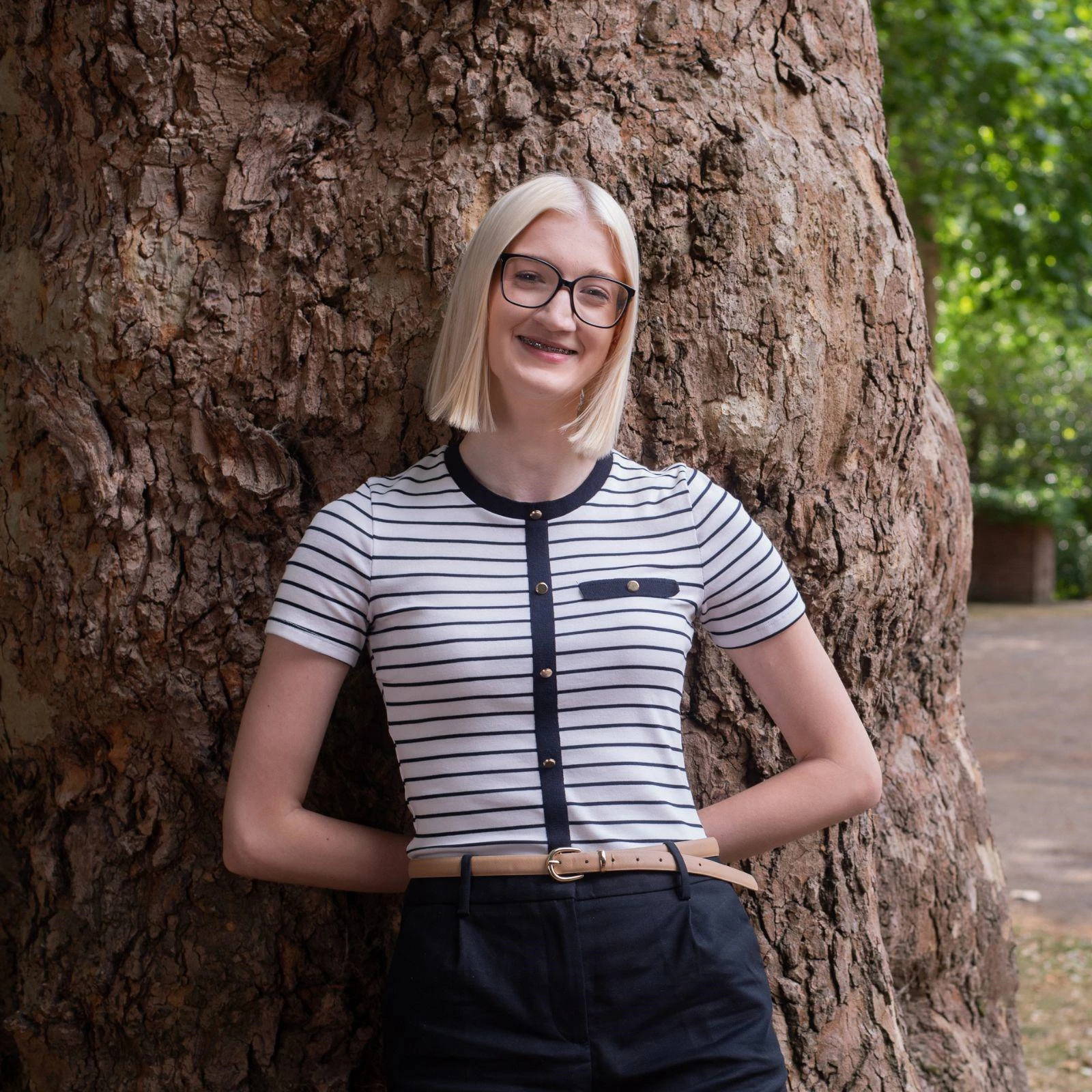
Zuzanna Czernicka
Warsaw School of Economics
My name is Zuzanna Czernicka, and I’m a master’s student in Global Business, Finance and Governance at SGH Warsaw School of Economics, currently also pursuing postgraduate studies in Data Science for Business Applications at the University of Warsaw. I attended LSE Summer School to study AC200: Sustainability Reporting in Capital Markets – a topic closely aligned with my academic interests and professional goals. Outside of academics, I enjoy city photography, swimming (a lifelong passion), and exploring how AI can support social good.