Home > Middle East Centre > Publications > Collected Papers
How to contact us

Middle East Centre
Tower 1, 10th Floor
London School of Economics and Political Science
Houghton Street
London WC2A 2AE 


General Enquiries and Events
Sandra Sfeir
+44 (0)20 7955 6198

Projects and Scholarships Enquiries 
Chelsea Milsom
+44 (0)20 7955 7038

Media and Communications Enquiries
Ribale Sleiman Haidar

+44(0)20 7955 6250

Facebook103x30Twitter103x30
MailingList207x30

Collected Papers

ForcedMigration100

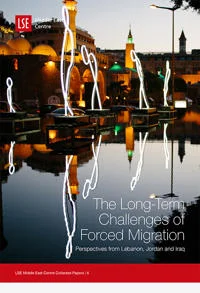
The Long-Term Challenges of Forced Migration: Perspectives from Lebanon, Jordan and Iraq
September 2016
In a workshop held on 17–18 June 2016, the LSE Middle East Centre brought together a diverse group of people (policymakers from host states, representatives from international organisations, academics and NGOs practitioners) to explore the effects of the Syrian refugee crisis on Arab host states such as Lebanon, Jordan, and Iraq.

 
AKPFP100

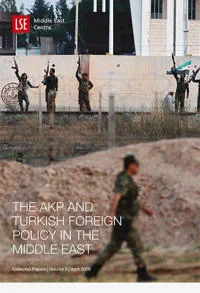
The AKP and Turkish Foreign Policy in the Middle East
April 2016


On 15 December 2015, the LSE Middle East Centre organised a workshop bringing together key experts on Turkish domestic and foreign policy. The workshop aimed at explaining the relationship between Turkish domestic politics and foreign policy in the Middle East in the midst of a period when both Turkey and the wider region are facing major challenges and undergoing significant transformations. This volume brings together a collection of papers presented at the workshop.

 
TurkeyDemocracy100

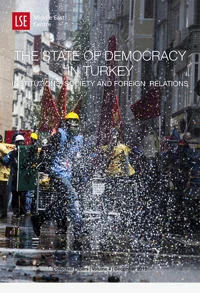
The State of Democracy in Turkey: Institutions, Society and Foreign Relations
December 2015

The major questions which surround the future of democracy in Turkey are aboutinstitutions and attitudes. The Middle East Centre and the Chair in Contemporary Turkish Studies at LSE organised a panel discussion and a workshop on the state of democracy in Turkey on 19-20 March 2015. A selection of the papers presented is published here.

 
MappingGCC100

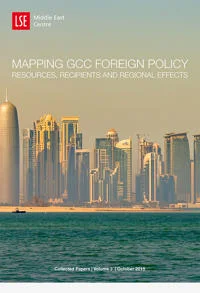
Mapping GCC Foreign Policy: Resources, Recipients and Regional Effects
October 2015

These papers were presented in Doha in January 2015 at a workshop on ‘Mapping GCC Foreign Policy: Resources, Recipients and Regional Effects’. The workshop aimed to analyse the increasingly interventionist Gulf Cooperation Council (GCC) states’ foreign policy. The first paper, by Evren Balta, addresses the impact of the Syrian war on Turkey’s Kurdish conflict, while the other two tackle Qatar’s foreign policy.  

 
Citizenship100

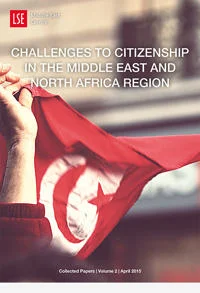
Challenges to Citizenship in the Middle East and North Africa Region
April 2015


This collected papers volume reflectes a range of theoretical and empirical understandings of how belonging and political identity have evolved in juridical practice and social  life in the Middle East and North Africa (MENA) region after 2011. The papers explore how, even within non-revolutionary states, ideas about citizenship have been changing and as  citizens and non-citizens test those boundaries within law and society, the outcomes reveal tensions and mounting pressures to reform along gender, class and ethnic lines.

 
GCCFP100

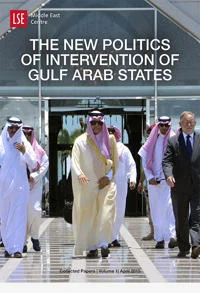
The New Politics of intervention of Gulf Arab States
April 2015


The purpose of the papers collected is to address drivers of foreign policy within GCC member-states, and subsequent interaction and effect of these policies in neighbouring countries. What we might also achieve is some shared conceptual clarity on frameworks for analysing foreign policy in the subregion, and to put forward some hypotheses about how the process of state-building in the region is changing both the agents and the practice of policy making. 

 
POMEPS100

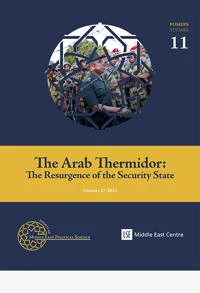
The Arab Thermidor: The Resurgence of the Security State
February 2015


How should we understand the authoritarian resurgence in the aftermath of the Arab uprisings? In October 2014, the MEC and POMEPS organised a workshop to dig deeply into the causes, mechanisms, and drivers of 'The Arab Thermidor'. More than a dozen scholars looked at specific sectors such as the military, police and intelligence services, different countries, and the broader regional environment.


Share:Facebook|Twitter|LinkedIn|
join the mailing list