How to Rig an Election
Speakers

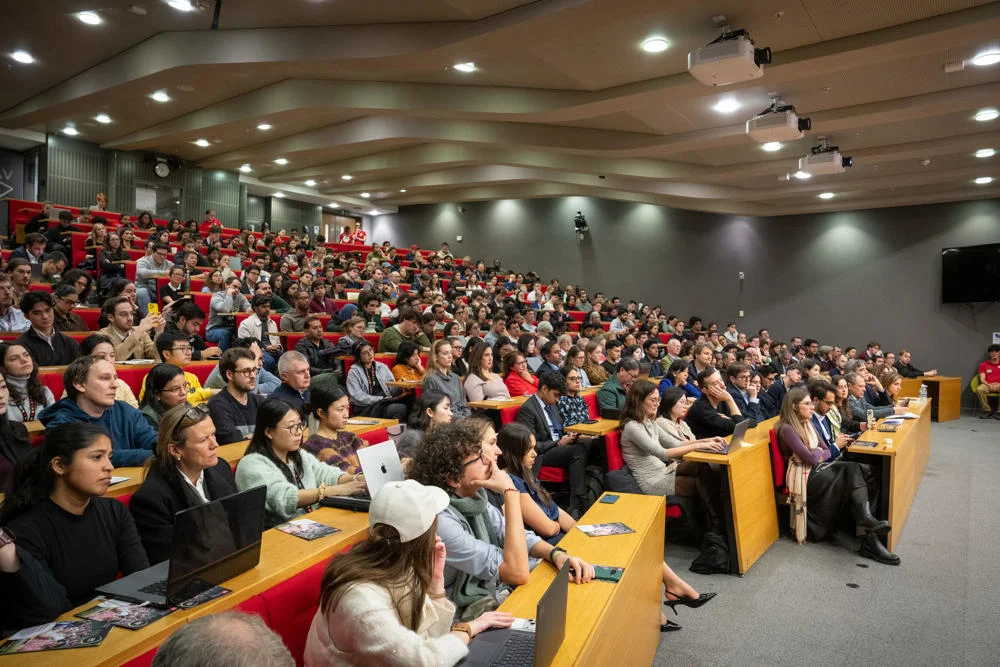
In this talk, Nic Cheeseman and Brian Klaas show how to rig an election - with the hopes that the lesson will help save democracy.
The greatest political paradox of our time is this: there are more elections than ever before but the world is becoming less democratic. Elections are often the frontlines in a global battle for democracy. Dictators, despots, and counterfeit democrats hold elections to legitimize their regime, but then rig them to ensure that they maintain their iron grip on power. Vote buying. Violent repression. Assassinating rivals. Gerrymandering. Voter suppression. Ballot box stuffing. And the digital frontier of hacking and disinformation campaigns.
Nic Cheeseman (@Fromagehomme) is Professor of Democracy at the University of Birmingham and was formerly the Director of the African Studies Centre at Oxford University. He is the recipient of the GIGA award for the best article in Comparative Area Studies (2013) and the Frank Cass Award for the best article in Democratization (2015). He is also the author of Democracy in Africa: Successes, failures and the struggle for political reform (Cambridge University Press, 2015), the founding editor of the Oxford Encyclopaedia of African Politics, a former editor of the journal African Affairs, and an advisor to, and writer for, Kofi Annan's African Progress Panel.
Brian Klaas (@brianklaas) is a Fellow in Comparative Politics at the London School of Economics. Klaas is an expert on democracy, authoritarianism, American politics, and elections. He is the author of The Despot's Apprentice: Donald Trump's Attack on Democracy, The Despot's Accomplice: How the West is Aiding & Abetting the Decline of Democracy, and How to Rig an Election (co-authored with Professor Nic Cheeseman; Yale University Press 2018). Klaas is also a columnist for The Washington Post.
Catherine Boone joined the LSE as Professor of Comparative Politics in 2013. She holds a BA from the University of California, and Ph.D from Massachusetts Institute of Technology (MIT).
The Department of Government (@LSEGovernment) at LSE is one of the largest political science departments in the UK. Our activities cover a comprehensive range of approaches to the study of politics.
Twitter Hashtag for this event: #LSEelections
Podcast
A podcast of this event is available to download from How to Rig an Election.
Podcasts and videos of many LSE events can be found at the LSE Public Lectures and Events: podcasts and videos channel.
Follow LSE public events on Twitterfor notification on the availabilility of an event podcast, the posting of transcripts and videos, the announcement of new events and other important event updates. Event updates and other information about what’s happening at LSE can be found on the LSE's Facebookpage and for live photos from events and around campus, follow us on Instagram. For live webcasts and archive video of lectures, follow us on YouTube.
This event has been certified for
purposes by the
. Self-Assessment Record forms will be made available for delegates wishing to record further learning and knowledge enhancement for Continuing Personal and Professional Development (CPD) purposes. For delegates who wish to obtain a CPD Certificate of Attendance, it is the responsibility of delegates to register their details with a LSE steward at the end of the event and as of 1 September 2014 a certificate will be sent within 28 days of the date of the event attended by the
. If a delegate fails to register their details at the event, it will not prove possible to issue a certificate. (For queries relating to CPD Certificates of attendance after a request please phone 0208 840 4383 or email
).
LSE holds a wide range of events, covering many of the most controversial issues of the day, and speakers at our events may express views that cause offence. The views expressed by speakers at LSE events do not reflect the position or views of The London School of Economics and Political Science.
From time to time there are changes to event details so we strongly recommend that if you plan to attend this event you check back on this listing on the day of the event.
LSE holds a wide range of events, covering many of the most controversial issues of the day, and speakers at our events may express views that cause offence. The views expressed by speakers at LSE events do not reflect the position or views of the London School of Economics and Political Science.
Subscribe to the LSE Events newsletter