5 min read
We sat down with Associate Professor Thomas Smith to learn more about IR104: Environment and Society: Science, Policy and Action. He explains how the course encourages students to look beyond purely scientific framings of environmental issues and consider how knowledge is produced, contested and used in shaping real-world responses.
What problem does your course aim to address?
Environmental crises are often presented as purely scientific problems, but they are also social and political ones. We hear phrases like “the science says”, but less often ask how that science is produced, how it becomes authoritative, whose knowledge is included, and what happens when evidence is uncertain, contested or politically inconvenient. This course is designed to help students think across that whole landscape. It introduces the scientific foundations of major environmental problems, but also asks how environmental knowledge is communicated, challenged and translated into governance.
What I want students to come away with is a more rounded understanding of environmental change: not just the physical processes themselves, but the social life of environmental evidence. That feels especially important now, when scientific expertise is both indispensable and under constant pressure from misinformation, denialism and competing political interests.
How does this course fit within the wider academic context?
The course sits at the intersection of environmental science, geography, international relations and environmental governance. What makes it distinctive is that it does not separate the natural and social sciences into neat boxes. Instead, it brings them into conversation. Students engage with core scientific questions around climate change, ozone depletion, air pollution, land degradation and wildfire, but also with debates about positivism and post-positivism, Indigenous and local knowledges, citizen science, hazard and vulnerability, and the politics of expertise.
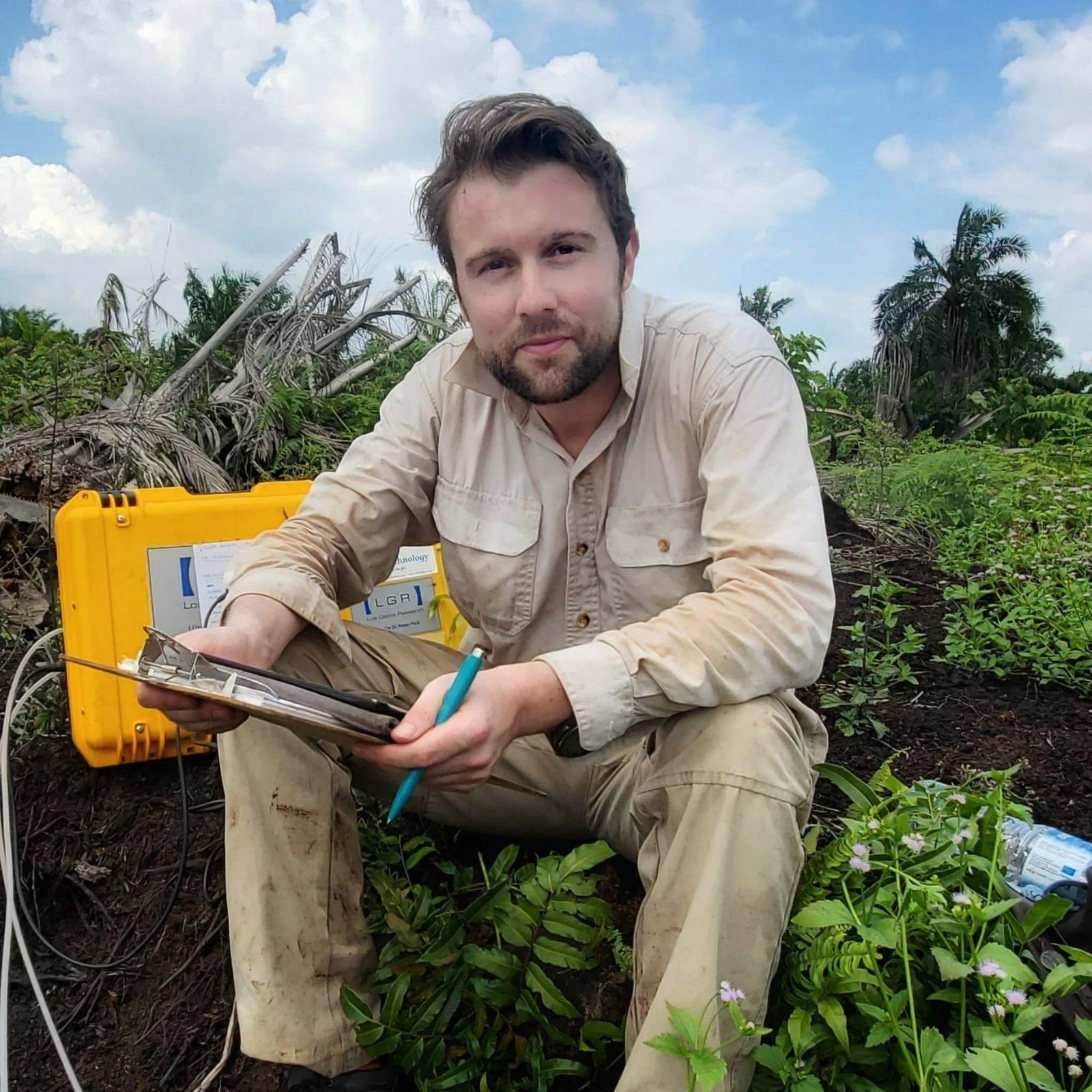
That interdisciplinarity is central to how I approach these issues in my own work. My wildfire research, for example, looks not only at the physical realities of fire and smoke, but also at how people perceive the problem, how smoke exposure is measured, and how Indigenous burning practices challenge dominant assumptions about what “good” environmental management looks like. That combination of physical process and social meaning runs through the course as a whole.
How can students who take this course apply it in their future career?
One of the strengths of the course is that the skills travel well. Students learn how to assess environmental claims critically, understand uncertainty, recognise how evidence is framed politically, and think carefully about how knowledge moves into policy. Those are valuable skills whether someone goes on to work in government, international organisations, NGOs, sustainability and ESG, journalism, environmental consulting, advocacy or research.
More broadly, the course helps students become more confident at working across the science–policy interface. That means being able to read evidence carefully, communicate it clearly, and ask better questions about whose voices are shaping environmental decisions. In practice, those are exactly the kinds of skills that are increasingly needed across environmental careers.
Could you please describe the practical components of the course and how students will engage in hands-on learning in the classroom?
Yes - practical engagement is a very important part of the course. I wanted students to do more than simply discuss environmental knowledge in the abstract, so one of the core practical elements is a citizen science air pollution activity. Students engage directly with environmental monitoring and reflect on what it means to generate knowledge for themselves, rather than only consuming expert claims from a distance.
There is also a half-day London fieldtrip built around a pollution walk, which gives students a chance to connect monitoring, regulation, lived experience and local governance in a very concrete way. Across the rest of the course, lectures are paired with class discussion and groupwork, and students also prepare a formative presentation linked to their first assignment. So, the learning is designed to be active throughout: analytical, practical and reflective.
What resources would you recommend to anyone interested in taking this course?
A good place to start is Mike Hulme’s ‘Why We Disagree About Climate Change’, because it captures something essential about the course: environmental issues are never only about physical science, but also about politics, culture and values. We’ll also cover works by Donna Haraway, Sheila Jasanoff, Elinor Ostrom, and Bruno Latour, when considering the relationship between science, democracy and expertise.
I’d also encourage students to start looking at the environmental data that already shapes their own everyday lives: air quality readings, heat alerts, flood risk maps, pollen forecasts, wildfire smoke information and so on. Where does that information come from? Who is making the measurements, and by what methods? How is it communicated, and what assumptions sit behind it? Those are exactly the kinds of questions we’ll be exploring throughout the course.
What is the most exciting thing students will learn in the classroom?
For me, the most exciting part is when students begin to see that environmental issues are not just “out there” waiting to be measured, but are also interpreted, narrated and governed in very different ways. A topic like wildfire, for instance, is never only about the flames; it is also about smoke, public perception, historical land management, competing knowledge systems and the politics of response. Once students start to see that, the subject opens up in a much richer way.
The comparative case studies also make the course especially engaging. Students move across climate change, ozone depletion, air pollution, peatland fires, disaster risk management, Indigenous fire management and the role of UNEP (with a guest lecturer from the World Conservation Monitoring Centre) in science–policy work. My hope is that they leave with a stronger understanding of environmental crises, but also with a sharper sense of how knowledge, power and action fit together.

Dr Thomas Smith
Associate Professor of Environmental Geography, Department of Geography and Environment
Tom is Associate Professor in Environmental Geography at the LSE. He joined the Department in 2018, having previously been a Lecturer at King’s College London. He holds a PhD in Physical Geography from King’s College London and has held Visiting Fellow posts at the National University of Singapore, Monash University Malaysia, University of Wollongong (Australia), and Universiti Brunei Darussalam. Tom specialises in interdisciplinary approaches to understanding the role of biomass burning in the Earth system. He is particularly interested in complex interactions between agricultural practices, land degradation, fire emissions characteristics and their associated impacts.