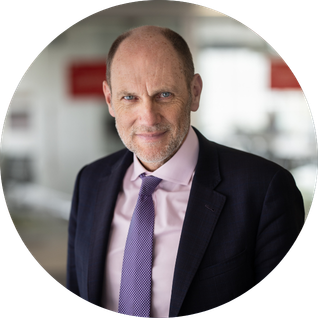
Professor Eric Neumayer
Deputy President and Vice Chancellor, Vice President and Pro-Vice Chancellor (Planning & Resources)
Artificial intelligence. Geopolitical uncertainty. Climate change. Few issues are reshaping the leadership agenda more profoundly.
For executives and senior leaders, success depends on balancing immediate pressures with long-term thinking in an increasingly complex world.
In this edition of 10 Questions, Professor Eric Neumayer, Deputy President and Vice Chancellor of LSE, discusses the root causes of today's sustainability challenges, the promise and uncertainty of AI, and the capabilities leaders need to navigate complexity.
"The real challenge isn't technology. The real question is why we don't have the policies to drive technology forward."
Q1: When it comes to achieving sustainability today, what are the most important global challenges? And why should leaders pay attention now?
A: I think it's important to distinguish between the immediate challenges and the root causes.
There are certainly technological challenges. Better and cheaper technologies will help us achieve sustainability. But even with the technologies we already have today, much more is achievable than we're currently delivering.
The root challenge is political and economic. We don't have the policies in place that would either incentivise or require industry and other major polluters to adopt these technologies. If the right policies were in place, we'd not only continue to develop new technologies, but also see much greater adoption of the ones we already have.
If I had to say which challenge is more important, I would say it's the political and economic one. The real question isn't, why don't we have the technologies? It's, why don't we have the policies that drive those technologies forward? To me, that's the real challenge.
Ultimately, sustainability is as much, if not more, a social science issue as it is a technology or science issue. Sustainability requires long-term solutions and long-term policy choices, but that's extremely difficult to achieve in a political environment focused on the short term and winning the next election.
Our political systems simply aren't geared towards solving problems that require decades of sustained commitment. That's one of the biggest barriers to making meaningful progress on sustainability.
Q2: Where do you see the most important sustainability tensions emerging, and what could they mean for policy, business and society in the coming years?
A: One of the biggest challenges is maintaining a long-term perspective.
Sustainability requires long-term solutions, but political systems are often focused on the short term. Businesses face similar pressures. Leaders are under pressure to deliver profitability now, but sustainability requires decisions that look much further ahead.
We still need a technological revolution to really make zero carbon a likely prospect. I don't want to minimise the importance of technology. But without the right policies in place, what is the incentive to apply AI or other technological advances to sustainability rather than to something completely different?
Technology is not the root cause. We need the right policies and incentives first. With those in place, the market will deliver breakthrough new environmentally friendly technologies, because AI will help massively in creative thinking and innovation. It can speed up scientific discovery, but technological solutions will only come when the right incentives are there.
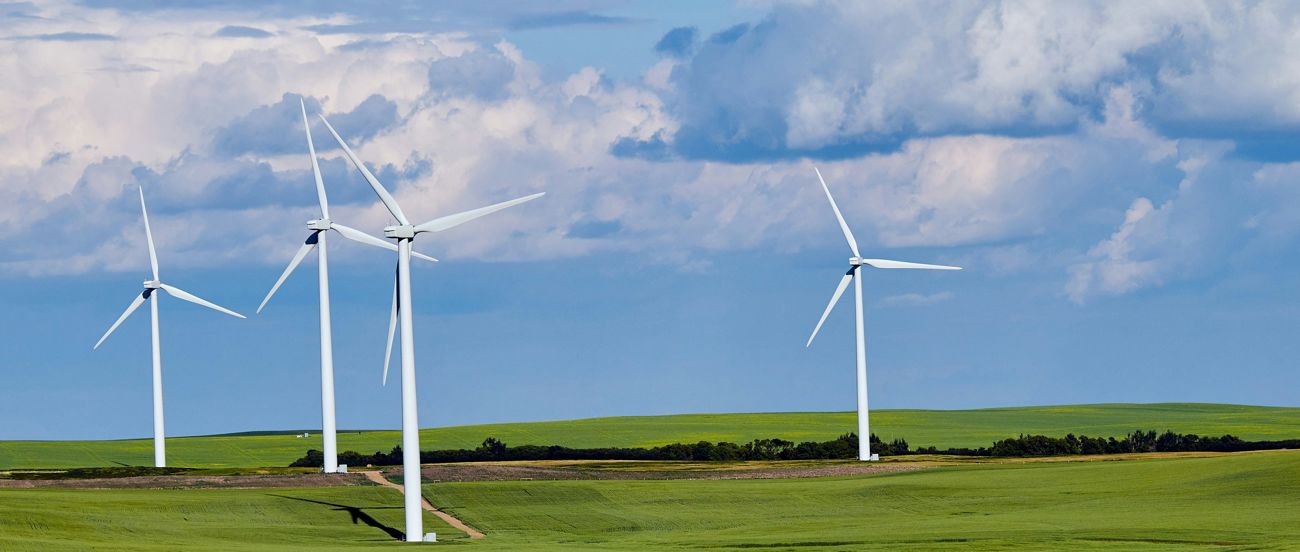
"The potential of AI as a positive force for sustainability is huge but unfortunately highly uncertain."
Q3: In your book Weak versus Strong Sustainability, you distinguish between the view that natural resources can be substituted through innovation and other forms of capital, and the view that some critical natural resources simply cannot be replaced. Could you give us some examples?
A: I regard fossil fuel resources such as oil, natural gas and coal, and pretty much also minerals and metals, as substitutable. I'm not really concerned that we're going to overexploit them or run them down to exhaustion.
It's very different when we look at biodiversity, ecosystems, the global climate, tropical rainforests, wetlands and mangroves. These are all examples of natural systems that cannot easily be substituted. They're also much more under threat. In many cases they're under threat of becoming extinct or, in the case of climate change, being shifted into a much higher-temperature state with far-reaching consequences.
That's the fundamental distinction. Fossil fuels, minerals and metals can, over time, be substituted through renewable energy resources, recycled, or used much more efficiently via innovation. Biodiversity, ecosystems and the global climate cannot. Once they're damaged or lost, there isn't a substitute that can simply replace the role they play.
That's why I see them as fundamentally different categories of natural resources.
Q4: Reports highlight that AI is driving up energy demand, yet many argue it can accelerate sustainability. Which view is right?
A: Both views are right. AI is a really interesting factor in the sustainability challenge.
On the one hand, a lot of people argue, quite reasonably, that AI is making things worse. We've all heard about data centres and electricity consumption. Clearly, it's putting a fresh blaze of wind on a house that's already on fire. I don't want to minimise that.
At the same time, AI could also be a major part of the solution to sustainability issues.
Take electricity, for example. AI could help balance uneven loads across the grid and it could also drive significant improvements in energy efficiency.
Energy storage is another major challenge. Solar and wind are intermittent, so we need better ways to store electricity. AI could help discover breakthrough battery technologies, which would make it so much easier to expand the generation of power from renewable sources. More generally, we know that AI can accelerate scientific discovery, perhaps by orders of magnitude, so the technological advances we still need may be greatly accelerated by AI.
Having said that, I think it's simply too early to tell whether AI will be a net positive or a net negative contributor to environmental sustainability.
Q5: So, are you optimistic about AI's role in sustainability?
A: I tend to be on the pessimistic side on these things, but I would hope to keep an open mind here.
The potential of AI is huge, its upside is huge, but it's uncertain. We already know the downside in terms of increased electricity consumption. The downside is probably not as big as the potential upside, but the challenge is that the upside remains a possibility rather than a guarantee.
Ultimately, I come back to the same point. AI cannot substitute for good policy. AI can help us discover new solutions, but only if the political and economic environment encourages those technologies to be developed and adopted.
"The best leaders persuade their boards to prioritise long-term value over short-term profits."
Q6: Given these shifts and trade-offs, what capabilities are becoming essential for leaders today?
A: I think one of the most important capabilities is thinking clearly through complex, uncertain and diffuse information. That's a real challenge for leaders today, and the best education helps people develop those skills.
Another is maintaining a long-term perspective. How do you avoid giving in to short-term pressure to deliver immediate profits? How do you keep the bigger picture in mind?
That also requires leaders to persuade others. They need to bring boards, shareholders and other stakeholders with them, explaining why a focus on short-term gains may not be in the company’s or organisation's long-term interest.
To me, that's one of the defining characteristics of leadership today: being able to take the longer-term view and communicate why it matters. Those are analytical and communication skills just as much as they are technical or subject-specific knowledge.
Q7: What distinguishes leaders who are navigating this complexity well from those who are falling behind?
A: The best leaders persuade their boards to prioritise long-term value over short-term profits. To me, that's what distinguishes a great leader from someone who simply delivers short-term gains.
It's about communication. Persuading boards and shareholders to take a longer-term view is a communication challenge. It's the narrative we provide and the stories we tell, backed up by facts, figures and evidence.
Leaders need to ask: What does our organisation want to stand for now, and what does it want to stand for in ten years' time?
I think we don't do a good enough job educating future leaders on why taking a longer-term view can actually be in the best interests of the organisation. Executive education has an important role to play in helping leaders develop both that perspective and the ability to communicate it effectively.
"The idea that ‘you study once at university and that's it’ is going to be over. From age 18 to 75, the university will still be relevant."
Q8: What role should executive education play in helping leaders respond to challenges like AI disruption and climate change?
A: Executive education is much more about analytical skills and communication skills than simply learning subject matter.
Most participants will already have studied something like economics, political science, finance, law or management. Executive education should build on that foundation. It shouldn't just teach substance; it should develop the deeper analytical skills and communication skills that leaders need to navigate an increasingly complex world.
The best executive education prepares leaders to become better thinkers in a broad sense, not just specialists in a particular subject. It helps them become better thinkers and better communicators.
Q9: How does lifelong learning need to evolve for mid-level executives operating in this environment?
A: Everything I've said about senior leaders also applies to mid-level executives, because ultimately, they want to become those senior leaders in the future.
One area where I think we need to evolve is by offering more transdisciplinary learning. Rather than focusing only on economics, finance or management as separate subjects, we should bring disciplines together around the challenges organisations are actually facing.
For example, we could offer programmes on sustainability or AI that draw on multiple disciplines rather than remaining within traditional academic silos.
Most executives already come with a disciplinary education. They may be economists, lawyers or managers. One of the great promises of executive education is that it can expose them to a much broader learning environment and give them a wider perspective on the world.
Q10: Looking ahead, how can institutions like LSE position themselves as long-term partners in leadership development, rather than one-off education providers?
A: The idea that “you study once at school or university and that's it” is going to be over.
The world is changing incredibly fast, and AI has only accelerated that pace of change. Every few years, people will need to update their knowledge and develop new skills that have become relevant to their work.
That means there will be much greater demand for true lifelong learning. Universities need to stay attuned to what's changing in the workplace and think carefully about the kinds of courses they should offer in response.
I also think we need to change how people think about universities. If you ask the average person who goes to university, they'll probably say 18- to 21-year-olds. They won't think about mid- and senior-level executives.
But the university should be relevant throughout people's careers. It's no longer just about the years immediately after school. From the moment people leave school until they retire, whether that's at 70 or 75, universities still have an important role to play in helping people continue to learn and adapt.
Professor Eric Neumayer
Deputy President and Vice Chancellor, Vice President and Pro-Vice Chancellor (Planning & Resources)
Eric joined the Department of Geography and Environment in 1998. He is currently LSE's Vice President Planning and Resources as well as LSE’s Deputy President and Vice Chancellor. An economist by training, he has published works on conflict, environment, globalisation and sustainable development.