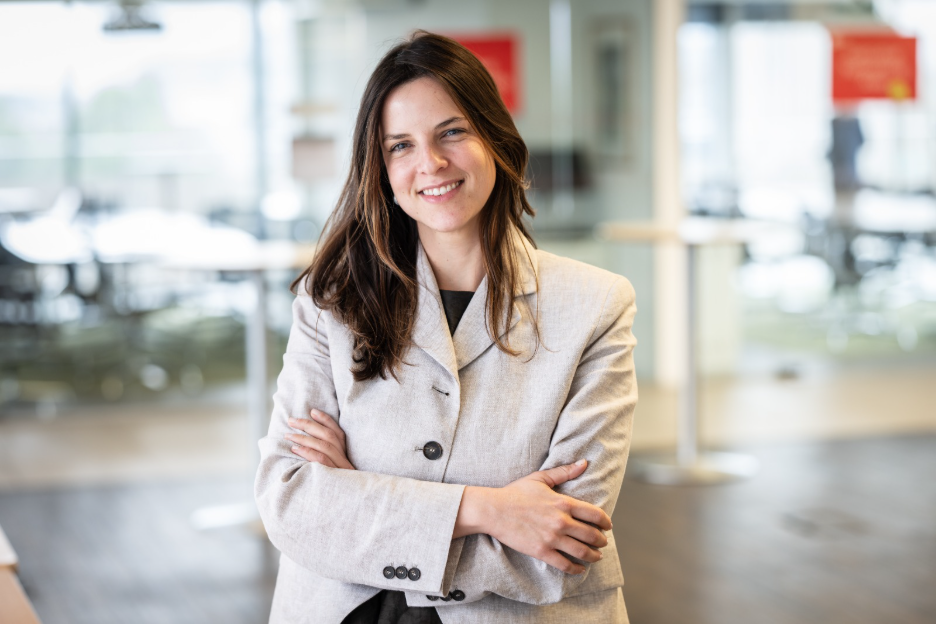
"The programme reinforced that strong risk management is not built only through frameworks, controls or governance structures. It depends on culture—on how people behave, communicate, challenge assumptions and make decisions every day. "
1. What is your current role? Did you always know that you wanted to work in risk management?
I am an Executive Director leading the Risk Monitoring team within Asset Servicing.
What attracted me to risk management was the opportunity to help organisations grow sustainably. For me, risk is not about saying “no”—it’s about enabling growth through informed decisions and controlled risk-taking.
Throughout my career, I’ve become increasingly interested in anticipating risks before they materialise and building risk frameworks, governance and monitoring structures that allow organisations to move fast while remaining resilient. That’s what continues to motivate me today.
2. Tell us about your journey to get here.
After many years working in financial services and leading teams, I felt it was the right time to broaden my perspective.
The challenges I face today are not only technical—they involve leadership, culture and decision-making across complex organisations.
What attracted me to this programme was its multidisciplinary approach to risk. I wanted to learn how leading organisations think about uncertainty, leadership and organisational effectiveness, and bring those insights back to my own organisation.
3. What has your experience been like so far?
It has been incredibly enriching.
One of the most valuable aspects has been learning alongside professionals from different industries, countries and organisational contexts.
Beyond the academic content, the exchange of experiences has been extremely powerful. Hearing real examples of how different organisations approach risk, leadership and decision-making has provided practical insights that I can immediately relate to my own challenges and opportunities back home.
4. What’s one new thing that you learned during this course?
Two concepts that particularly resonated with me were Risk Culture and Risk Position.
The programme reinforced that strong risk management is not built only through frameworks, controls or governance structures. It depends on culture—on how people behave, communicate, challenge assumptions and make decisions every day.
I also found the discussion around Risk Position particularly valuable. Understanding an organisation’s current risk position and aligning decisions with its objectives, risk appetite and strategic ambitions provides a much richer perspective than looking at individual risks inisolation.
Together, these concepts reinforced that effective risk management is ultimately about helping organisations make better decisions under uncertainty.
5. Is there anything you’ll immediately use when you return to work?
Absolutely.
One of my biggest takeaways is that the role of risk management should be to improve decision quality across the organisation.
I am excited to bring back some of the discussions around risk culture, decision-making and leadership, helping teams and stakeholders have better conversations about uncertainty, trade-offs and opportunities.
Ultimately, I believe the greatest value of risk management is not identifying risks—it is helping organisations make better decisions and achieve their objectives more effectively.
6. Could you describe your experience on the course in 3 words?
Challenging. Expanding. Thought-provoking.