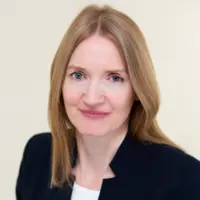
Dr Emma Soane
Associate Professor of Management
Netflix’s success is not just the result of successful content; the subscription video service has shown a willingness to take bold risks. From backing unconventional shows like Stranger Things to challenging Hollywood’s release models, Netflix has cultivated a ‘risk position’ that runs through its culture, structure, leadership, and decision-making.
And this is exactly what many organizations lack.
While we often talk about “organizational culture”, we hear far less about how a company frames and manages its relationship with risk - what I describe as its “risk position”. I believe an organization’s risk position should be considered as fundamental as its strategy, structure, culture, leadership and high-performance work practices, such as policies and rewards.
In decades of working with leaders, I’ve seen how risk is often treated as a compliance issue. It’s too commonly synonymous with threat or danger and, as a result, it’s seen as a barrier to innovation. The opportunity side of risk - as something that drives an organization’s growth and transformation - tends to get lost.
Take, for example, a fast-growing cloud services firm I’ve worked with. While the board was confident that they knew the risk the company was taking, senior leaders weren’t so sure. In private conversations, senior leaders admitted that they worried about how “exposed to risk” the firm was. They didn’t think anyone was “going rogue”, but they knew they didn’t have a mechanism to understand their risks across the business. The risk function existed, of course, but the organization lacked a shared risk position.
That distinction matters. A risk position isn’t just about measuring exposure. It’s about intentional choices: where are we taking risks and why? Where are we trying to avoid risks? What appetite for uncertainty do we have in pursuit of our goals and how are we managing that? Taking a risk position is about clarifying managers’ stance on risk as part of how their decisions about how organizations perform and survive.
In a new paper just published in the Journal of Risk Research, I argue that risk is not only an external factor, but also something shaped and managed internally. It’s embedded in organizational structures and processes. My paper introduces the concept of unit-level risk position: a function of managerial choices combining risk appetite and risk management in pursuit of organizational goals. A clear risk position allows managers to align risk-taking with strategic intent.
It also empowers teams across organizations to talk about risk constructively. Without that framework, risk becomes the domain of the compliance team, or the legal team, and everyone else stays quiet. In industries like film and TV, this silence can be dangerous. On platforms like safesetsmovie.org, freelancers anonymously share concerns about unsafe conditions on film sets. The tragic death of Sarah Jones over a decade ago still looms large in the industry. It’s not that people don’t care about risks; it’s that they don’t always have the language or permission to talk about it.
Compare that with organizations that treat risk as everyone’s business. The UK’s oldest business, The Royal Mint, for instance, has evolved from a coin manufacturer into a player in precious metal recovery. This is a major shift requiring a very different risk position that demanded new thinking across strategy, leadership, culture, and operations.
By talking about a risk position, instead of just risk, leaders make risk visible, strategic and a shared endeavour.
Dr Emma Soane
Associate Professor of Management
Emma Soane is a Chartered Psychologist, Chartered Scientist and an Associate Fellow of the British Psychological Society. Before joining LSE in 2008, she worked for many years in the field, both in public and private sector organisations; from the UK government to NHS hospitals, manufacturing, waste management and top-tier investment banks. She holds a PhD in Psychology and an MSc in Occupational Psychology, both from the University of Sheffield.