BEGIN:VCALENDAR
VERSION:2.0
PRODID:-//hacksw/handcal//NONSGML v1.0//EN
CALSCALE:GREGORIAN
BEGIN:VTIMEZONE
TZID:Europe/London
BEGIN:STANDARD
TZNAME:GMT
DTSTART:19710101T020000
TZOFFSETFROM:+0100
TZOFFSETTO:+0000
RRULE:FREQ=YEARLY;BYMONTH=10;BYDAY=-1SU
END:STANDARD
BEGIN:DAYLIGHT
TZNAME:BST
DTSTART:19710101T010000
TZOFFSETFROM:+0000
TZOFFSETTO:+0100
RRULE:FREQ=YEARLY;BYMONTH=3;BYDAY=-1SU
END:DAYLIGHT
END:VTIMEZONE
BEGIN:VEVENT
DTEND;TZID=Europe/London:20170526T140000
UID:https://www.lse.ac.uk/granthaminstitute/?post_type=event&p=23758
DTSTAMP;TZID=Europe/London:20260916T053527Z
LOCATION:London School of Economics\, Parish Hall\, Room LG.03
DESCRIPTION: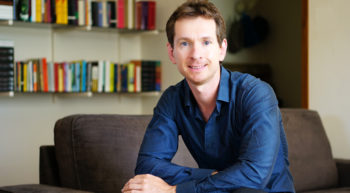 Across the globe\, governments\, firms\, non-profit organisations\, and citizens have developed and implemented voluntary programs for sustainable building and city development. These programs target property owners and developers\, making them commit voluntarily to achieve higher levels of environmental performance than what is stipulated by law.
In this seminar\, Dr Jeroen van der Heijden discusses key findings from a study of 35 such programs in Australia\, India\, Malaysia\, the Netherlands\, Singapore\, and the USA. He finds that program administrators are biased towards attracting urban climate leaders\, assuming that once the leaders have committed to these programs and show promising results the laggards will follow. Yet\, this oft expected spill-over effect does not materialize in the 35 programs studied. Seeking to draw detailed lessons about this participation gap Dr van der Heijden carefully unpacks the programs\, following ‘club theory’\, ‘urban transformation’ theory\, and ‘diffusion of innovations’ theory. Building on over 200 interviews with stakeholders involved in these programs and a close reading of secondary data he finds that the heterogeneity of the property and development sectors (and cities more broadly) makes voluntary programs an ill-suited innovative governance instrument to achieve radical change. He concludes this seminar with suggestions on how such programs might be used in future urban climate governance regimes to yield better results. In part\, this requires a different thinking about laggards and the majority market in the property and development sectors.
Across the globe\, governments\, firms\, non-profit organisations\, and citizens have developed and implemented voluntary programs for sustainable building and city development. These programs target property owners and developers\, making them commit voluntarily to achieve higher levels of environmental performance than what is stipulated by law.
In this seminar\, Dr Jeroen van der Heijden discusses key findings from a study of 35 such programs in Australia\, India\, Malaysia\, the Netherlands\, Singapore\, and the USA. He finds that program administrators are biased towards attracting urban climate leaders\, assuming that once the leaders have committed to these programs and show promising results the laggards will follow. Yet\, this oft expected spill-over effect does not materialize in the 35 programs studied. Seeking to draw detailed lessons about this participation gap Dr van der Heijden carefully unpacks the programs\, following ‘club theory’\, ‘urban transformation’ theory\, and ‘diffusion of innovations’ theory. Building on over 200 interviews with stakeholders involved in these programs and a close reading of secondary data he finds that the heterogeneity of the property and development sectors (and cities more broadly) makes voluntary programs an ill-suited innovative governance instrument to achieve radical change. He concludes this seminar with suggestions on how such programs might be used in future urban climate governance regimes to yield better results. In part\, this requires a different thinking about laggards and the majority market in the property and development sectors.
Jeroen van der Heijden is an associate professor\, affiliated with the Australian National University (Regulatory Institutions Network) and the University of Amsterdam (Amsterdam Law School). He works at the intersections of regulation and governance\, policy change\, and urban development and transformation. Jeroen's research aims to improve local\, national and international outcomes of urban governance on some of the most pressing challenges of our time: climate change\, energy and water use\, and a growing and increasingly urbanising world population.
URL;VALUE=URI:https://www.lse.ac.uk/granthaminstitute/events/seminar-jeroen-van-der-heijden-forget-urban-climate-leaders-why-urban-climate-governance-urgently-needs-to-be-tailored-to-laggards-and-how-it-can-be-done/
SUMMARY:Seminar | Jeroen van der Heijden ‘Forget urban climate leaders: Why urban climate governance urgently needs to be tailored to laggards\, and how it can be done’
DTSTART;TZID=Europe/London:20170526T123000
END:VEVENT
END:VCALENDAR